侍 are without a doubt one of Japan's best known historical figures; the image of the proud warrior standing strong to his last breath is inseparable from almost any part of the nation's ancient history and culture. Like 忍者 (にんじゃ - ninja) though, it doesn't take long before the history ends and the fantasy begins. Let's try to keep the demons and magic swords to a minimum - the stories and legacies of some of Japan's most famous 侍 are amazing enough as they are.
Showing posts with label samurai. Show all posts
Showing posts with label samurai. Show all posts
Thursday, December 15, 2011

Thursday, December 2, 2010
お中元とお歳暮 (おちゅうげんとおせいぼ - ochuugen to oseibo) - Mid-year and end of year gifts
Japan has always had a strong gift-giving culture that predates recent imports like バレンタインデー (barentain de-) Valentine's Day and クリスマス (kurisumasu - Christmas); お中元 (おちゅうげん - ochuugen - mid-year gifts) and the corresponding お歳暮 (おせいぼ - oseibo - end of year gifts) have been traditions since feudal times. They're sometimes known as Summer and Winter gifts, due to the arrival of お中元 just before 夏休み (なつやすみ - natsu yasumi - Summer holidays) and お歳暮 just as 冬 (ふゆ - fuyu - Winter) starts to bite. Wondering why that big box has arrived at your door days after you'd be expecting any クリスマス presents? Wonder no more - 'tis the season for giving, in more ways than one!
Friday, November 26, 2010
日本の四つの季節その3:秋 (にほんのよつのきせつそのさん:あき) - The Four Seasons of Japan 3: Autumn
秋 (あき - aki - Autumn) is widely considered the best season of the year in Japan, sharing a very comfortable temperature range with 春 (はる - haru - Spring). While 春 is associated with the excitement of new beginnings, in some ways 秋 is much more subdued; it's a time to relax, reflect and enjoy the weather as it cools the scorching highs of 夏 (なつ - natsu - Summer). Having said that, 紅葉狩り (もみじがり - momijigari - Autumn leaf viewing, literally "maple hunting") is as big a deal as 花見 (はなみ - hanami - cherry blossom viewing) and when you start seeing whole hillsides turning blazing red, I'm sure you'll understand why.
Friday, November 19, 2010
七五三 (しちごさん - shichi go san) - 7-5-3
七五三 is a coming-of-age festival that takes place on or around the 15th of November every year. Children aged three, five and seven are taken to 神社 (じんじゃ - jinja - shrines) nationwide and offered blessings by the priests to ensure good fortune and longevity. What makes this most interesting to watch is that all the kids are dressed to the nines in 着物 (きもの - kimono) or Western-style suits for the occasion; they totter along beside their parents like little stunt doubles. On an otherwise fairly gloomy day at 生田神社 (いくたじんじゃ - ikuta jinja - Ikuta Shrine) in 三宮 (さんのみや - Sannomiya), all the bright colours were a very welcome addition.
Thursday, July 1, 2010
オタクの世界 (おたくのせかい - otaku no sekai) - The world of "otaku"
There seems to be some disagreement about what "オタク" actually are but for the sake of brevity, let's just call them "nerds", "geeks" and as some people on the internet call them, "fanboys/fangirls". Essentially, they're people with an obsession; their lives seemingly revolve around something that isn't nearly as important to other people. This is commonly referred to in Japan as a マニア (mania), which is why オタク are sometimes called マニアック (maniacs). Given that this is the land of アニメ (anime), マンガ (manga) and テレビゲーム (terebi geemu - video games) these are the most common マニア which I'll be focusing on today, but there are others. One of my coworkers is a self-confessed 電車オタク (でんしゃおたく - densha otaku - "train geek") and I'm told this isn't uncommon! Next stop, オタクの世界.
The word オタク started out as derogatory - it had the same connotations as "loser" or "freak", but that's started to change. Some people now wear it as a badge of honour, but it can still cause offence for those who don't. The modern オタク community has properly found its feet on the internet with Japanese image and chat boards such as 2channel (pronounced "二チャンネル" - ni channeru). Forums like this offer オタク the chance to post anonymously on thousands of different topics; most Japanese internet slang, jokes and pop culture come from boards like 2channel. Sometimes they even blossom into full-blown cultural phenomena. Probably the most famous example of this was an incident known as 電車男 (でんしゃおとこ - densha otoko - train man). It involved a romantically clumsy オタク who spent several months getting advice from posters about how he could win over a girl he met on the train one day. True or not, it ended up being made into several マンガ series and even turned into a soap opera! This is definitely worth Googling.
Not all オタク are shrinking violets, mind you - there are many public events and conventions that cater to their hunger for collectibles and spending time with like-minded people. These are sometimes known as オタコン ("otacon"), which is a Japanese shortening of the words "オタク" and "convention". At these, オタク are able to buy マンガ, フィギュア ("figyua" - figurines of popular characters), prints based on their favourite series and almost any other merchandise you can imagine. If it exists, someone collects it.
Perhaps the most interesting part of オタコン and other events is the コスプレ ("cosplay"). This is another Japanese shortening of "costume" and "play", basically meaning fancy dress. Given the dedication of some people to their art, the results can be amazing, as I found out when I visited this year's "Osaka Street Festa".

This might not be quite what you imagine when you think of reserved, measured Japan! The surging crowds spoke for themselves, though - hundreds of オタク dressed in specially made costumes, wigs and all. When the hair was too impractical to be real, they just made it themselves!

The Yu-Gi-Oh, Pokemon and Dragonball fans were out in force and for every one cosplayer there were ten people there to take photos.

Some of the cosplayers themselves even had the cameras out - these One Piece fans in particular didn't want to let the opportunity for some good photos get away.

Not everyone was dressed up as modern characters of course, like this cosplayer dressed as 食い倒れ太郎 (くいだおれたろう - kuidaore tarou). He's an old clown-like drummer puppet that stands outside a restaurant in Osaka, who's become a bit of a symbol of the city. His name roughly translates to "eat until you collapse Tarou", which must be something Osaka is renowned for!

In what would have to be the strangest part of the event, the cleaners then showed up in full costume. I think it's the only time I'll ever see people in samurai costumes picking up rubbish on the street! Welcome to オタクの世界, where even the cleaners enjoy a little コスプレ. I find it amazing that such a large community has sprung up from what must have been humble roots - such is the power of the internet and two-speed Japanese culture. オタク rejoice, and rest assured that whatever kind of マニア you have, there'll be plenty of other マニアック you can share it with. They might even help you make your costume.
The word オタク started out as derogatory - it had the same connotations as "loser" or "freak", but that's started to change. Some people now wear it as a badge of honour, but it can still cause offence for those who don't. The modern オタク community has properly found its feet on the internet with Japanese image and chat boards such as 2channel (pronounced "二チャンネル" - ni channeru). Forums like this offer オタク the chance to post anonymously on thousands of different topics; most Japanese internet slang, jokes and pop culture come from boards like 2channel. Sometimes they even blossom into full-blown cultural phenomena. Probably the most famous example of this was an incident known as 電車男 (でんしゃおとこ - densha otoko - train man). It involved a romantically clumsy オタク who spent several months getting advice from posters about how he could win over a girl he met on the train one day. True or not, it ended up being made into several マンガ series and even turned into a soap opera! This is definitely worth Googling.
Not all オタク are shrinking violets, mind you - there are many public events and conventions that cater to their hunger for collectibles and spending time with like-minded people. These are sometimes known as オタコン ("otacon"), which is a Japanese shortening of the words "オタク" and "convention". At these, オタク are able to buy マンガ, フィギュア ("figyua" - figurines of popular characters), prints based on their favourite series and almost any other merchandise you can imagine. If it exists, someone collects it.
Perhaps the most interesting part of オタコン and other events is the コスプレ ("cosplay"). This is another Japanese shortening of "costume" and "play", basically meaning fancy dress. Given the dedication of some people to their art, the results can be amazing, as I found out when I visited this year's "Osaka Street Festa".
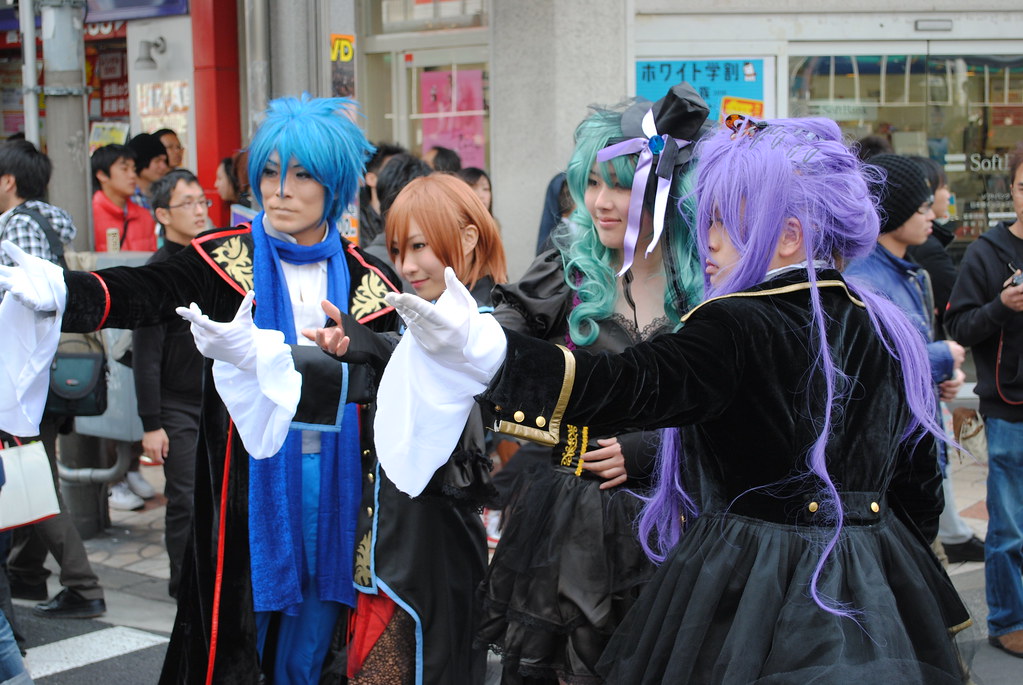
This might not be quite what you imagine when you think of reserved, measured Japan! The surging crowds spoke for themselves, though - hundreds of オタク dressed in specially made costumes, wigs and all. When the hair was too impractical to be real, they just made it themselves!
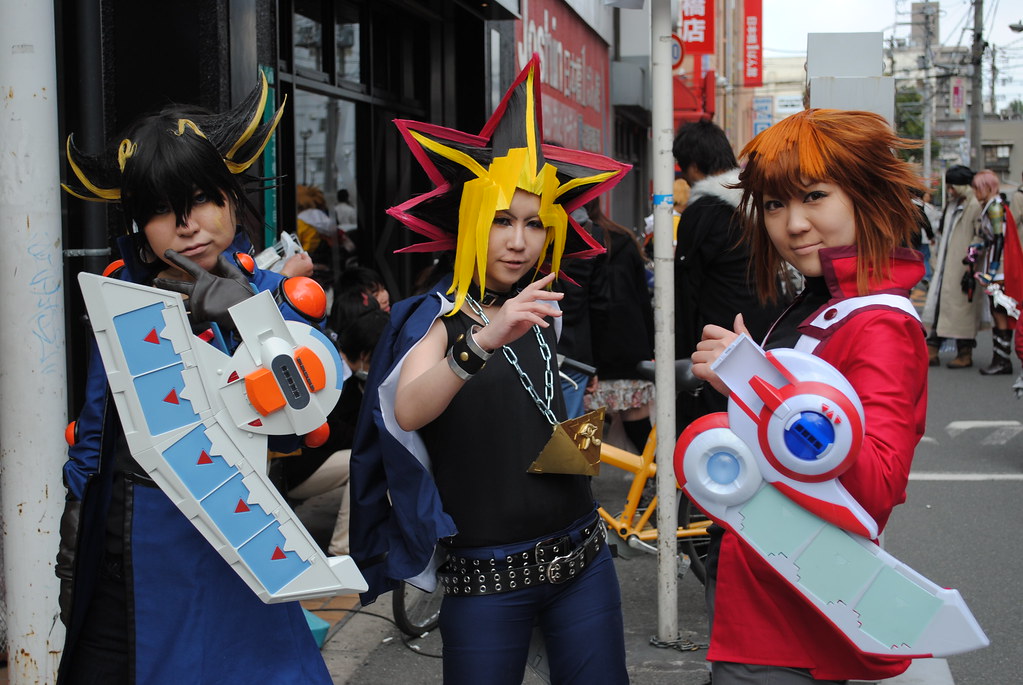
The Yu-Gi-Oh, Pokemon and Dragonball fans were out in force and for every one cosplayer there were ten people there to take photos.
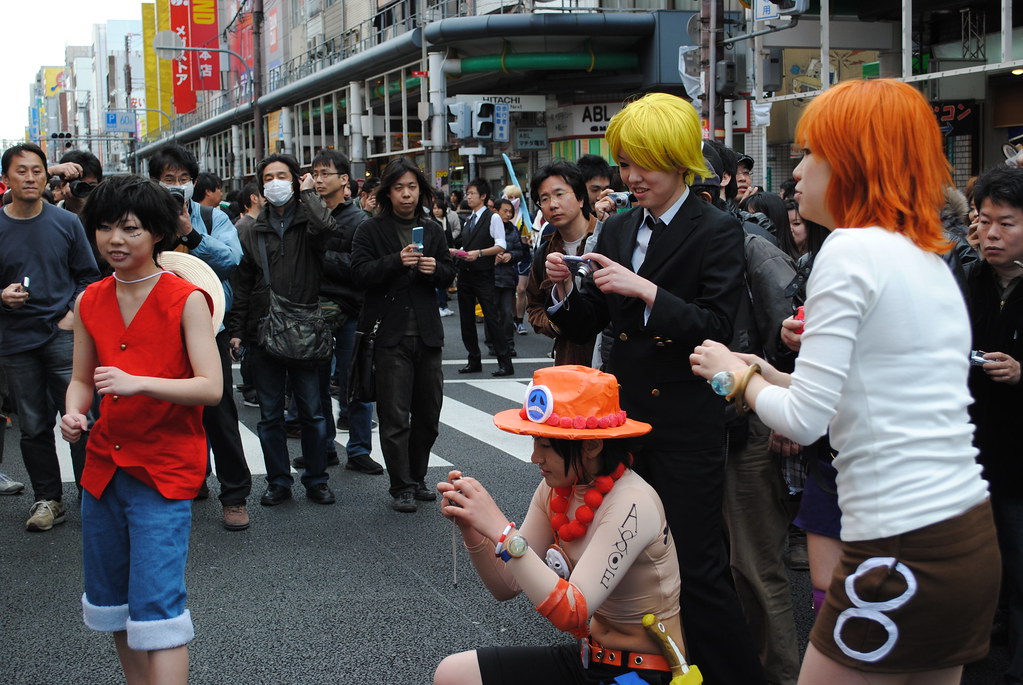
Some of the cosplayers themselves even had the cameras out - these One Piece fans in particular didn't want to let the opportunity for some good photos get away.
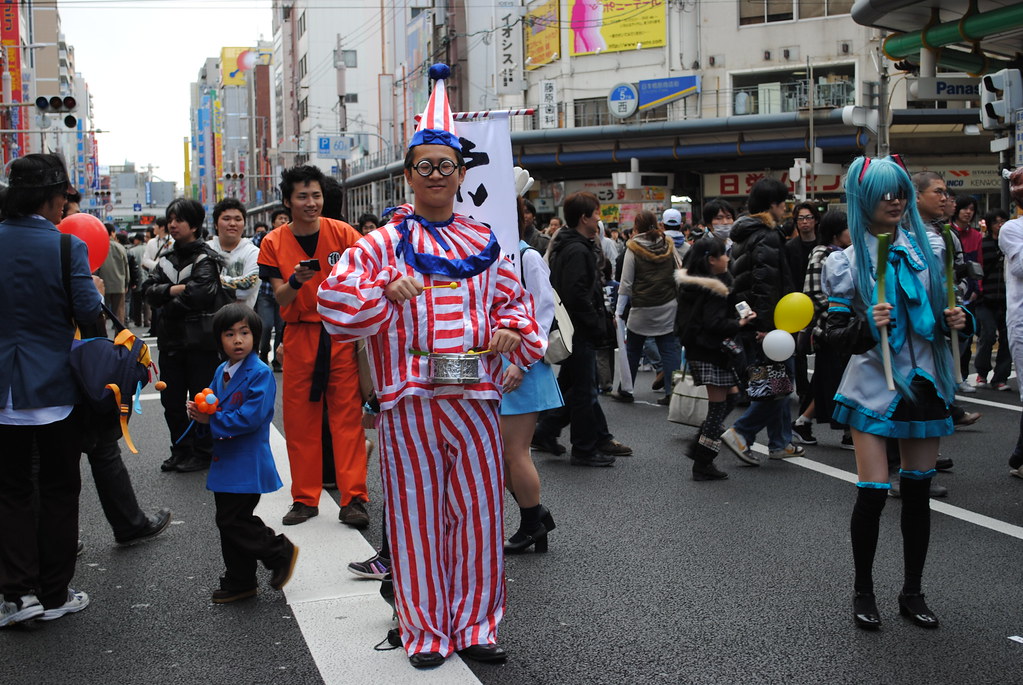
Not everyone was dressed up as modern characters of course, like this cosplayer dressed as 食い倒れ太郎 (くいだおれたろう - kuidaore tarou). He's an old clown-like drummer puppet that stands outside a restaurant in Osaka, who's become a bit of a symbol of the city. His name roughly translates to "eat until you collapse Tarou", which must be something Osaka is renowned for!
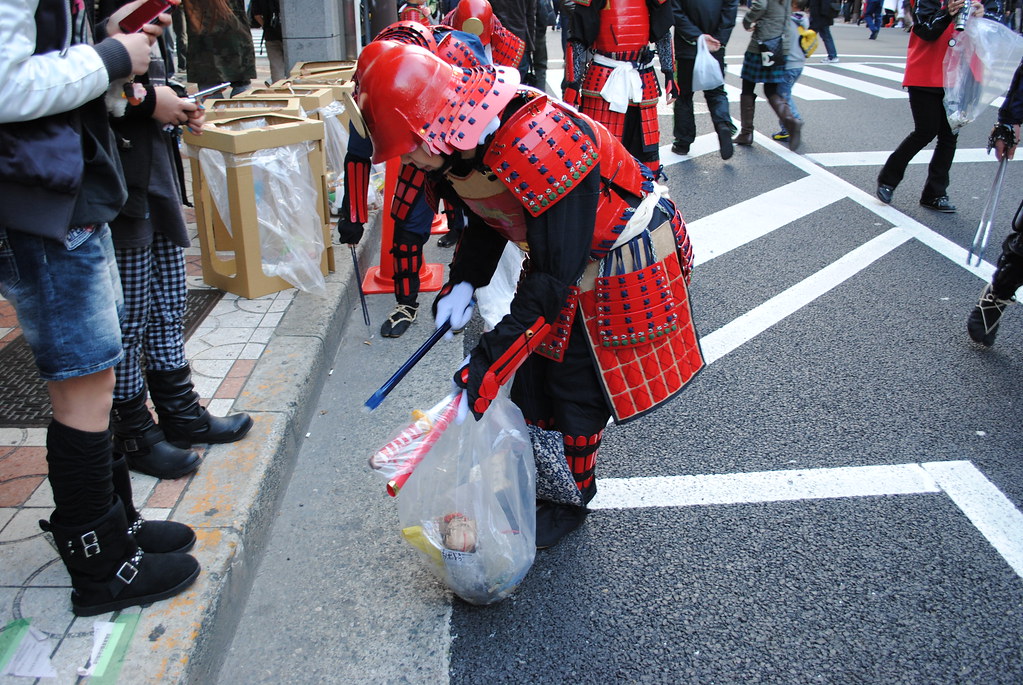
In what would have to be the strangest part of the event, the cleaners then showed up in full costume. I think it's the only time I'll ever see people in samurai costumes picking up rubbish on the street! Welcome to オタクの世界, where even the cleaners enjoy a little コスプレ. I find it amazing that such a large community has sprung up from what must have been humble roots - such is the power of the internet and two-speed Japanese culture. オタク rejoice, and rest assured that whatever kind of マニア you have, there'll be plenty of other マニアック you can share it with. They might even help you make your costume.
Friday, May 14, 2010
ゴールデンウィーク (Golden Week)
ゴールデンウィーク (often shortened to the letters "GW" in Japan) is arguably the biggest holiday season in Japan, along with お盆 (おぼん - Obon) in mid-August and シルバーウィーク (Silver Week) in mid-late September. GW is basically a string of public holidays spanning from late April to early May that usually mean at least five days off work. It's the perfect excuse for Japan to pack her bags and go just about everywhere else you can imagine for a well-earned break. The only problem with travelling during GW is that everyone else has the same idea!
Subscribe to:
Posts (Atom)